About Me
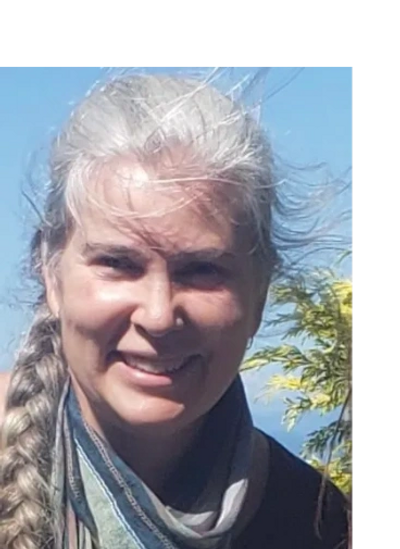
Pat MacIntosh, BA, CCRC, RRP, CVRP, CCDP
- I am a Career Counsellor and Vocational Rehabilitation Consultant with over 30 years experience providing services and supports to people with disabilities.
- I understand how psycho-social factors may impact health and wellness.
- I work closely with health care providers and medical practitioners to assist people with disabilities achieve therapeutic goals including increased function and mobility, independence and engagement in the community.
- Many of my clients have benefitted from volunteering and have found that it has helped them to increase their confidence, develop new skills and gain supportive relationships.
- I have a certificate in Volunteer Management from Vancouver Community College and take part in professional development opportunities with Volunteer Canada, Volunteer BC, the Volunteer Management Professionals of Canada and the Vocational Rehabilitation Association of Canada.
- I have been a volunteer with the SPCA, Steveston Farmers' Market, Immigrant Services Society, Richmond Cares Richmond Gives, the Disability Foundation and Richmond Centre for Disability.
- I have volunteered as an Event Photographer, an Immigrant Settlement Mentor, an Accessible Gardening Program Coordinator and a Newsletter Editor. I recently volunteered as a Program Assistant with a craft collective for indigenous and non-indigenous elders.
- I have gained valuable insights regarding the volunteer experience first hand as well as from informal discussions with other volunteers, community members and Volunteer Managers.
- I want to share what I have learned to assist volunteer associations to become more welcoming and inclusive to people with disabilities who may be interested in volunteering.
- I also offer individualized services to people with disabilities to help them overcome barriers to inclusion and ensure that they have positive and enriching experiences in their community.
- I am a member of the Social Prescribing Arts and Culture Community of Practice and have taken part in webinars and conferences with the recently launched Canadian Institute of Social Prescribing.
- I have particular interest in collaborating with the non-profit sector to build their capacity to meet the needs of people with disabilities who may be referred through a social prescribing program.
Credentials
Bachelor of Arts degree in English and Psychology (BA)
Canadian Certified Rehabilitation Counsellor (CCRC)
Registered Rehabilitation Professional (RRP)
Certified Vocational Rehabilitation Professional (CVRP)
Certified Career Development Professional (CCDP)
Volunteer Management Certificate
Certificate in Walk and Talk Therapy
Land Acknowledgement, Indigenous Truth and Reconciliation
I live and work in the lower mainland of British Columbia and acknowledge that this land is the traditional and unceded territory of the Semiahmoo, Katzie, Kwikwetlem, Kwantlen, Tsawwassen, Qayqayt, Musqueam, Squamish, Tseil-Waututh and Stó:lō First Nations. I thank the Coast Salish Peoples and their Elders for their stewardship of the land and their hospitality. I hope that my work and ways of being contribute to building relationships with Indigenous Peoples and furthering Indigenous truth and reconciliation.
A Guide to the Pronunciation of Indigenous Communities and Organizations in BC, September 2018 Guide to Aboriginal Organizations and Services in British Columbia.
a_guide_to_pronunciation_of_bc_first_nations_-_oct_29_2018.pdf (gov.bc.ca)
First Nations spelling and phonetic English pronunciations
Semiahmoo (semi-AH-moo)
Katzie / q̓ic̓əy̓ (kat-zee)
Kwikwetlem / kʷikʷəƛ̓əm (kwee-kwet-lum)
Kwantlen / qʼʷa:n̓ƛʼən̓ (kwant-len)
Tsawwassen / c̓əwaθən məsteyəxʷ (tah-WASS-en)
Qayqayt (kay-kite)
Musqueam / xʷməθkʷəy̓əm (mus-kwee-um)
Squamish / Sḵwx̱wú7mesh Úxwumixw (skwa-mish)
Tsleil-Waututh / səlilwətaɬ / sel̓íl̓witulh (sail-wha-tooth)
Stolo / Stó:lō (staw-lo)
HALKOMELEM language
Hul’q’umi’num’ / Halq’eméylem / hən̓q̓əmin̓əm̓ (hulk-ah-MEE-num)
Halkomelem is a language spoken by various First Nations peoples of the British Columbia Coast. It is classified as a member of the Central Salish branch of the Salishan family of languages. The word Halkomelem is an anglicization for the language Hul'qumi'num, which has three distinct dialect groups:
1. Hulquminum / Hul'qumi'num (Island dialect) or "Cowichan",
2. Hunquminum / hǝn̓q̓ǝmin̓ǝm̓ (Downriver dialect) or "Musqueam" (spoken by seven First Nations in the Lower Mainland in and around Vancouver, as well as in the Fraser River Delta and the lower reaches of the Fraser River;
3. Halqemeylem / Halq’eméylem (Upriver dialect) or "Stó:lō" spoken by today by the First Nations upstream along the Fraser River from Matsqui on to Yale.
Hul’q’umi’num’ / Halq’eméylem / hən̓q̓əmin̓əm̓ Language Resources and Stats (fpcc.ca)
B.C. elder receives honorary degree for efforts to keep the Halq'emeylem language alive | CBC News
Semiahmoo First Nation (semi-AH-moo)
The Semiahma are a proud and determined trans-boundary nation located in both Canada and the United States. While our traditional territories are now divided between the two countries, we remain closely connected to the Lummi & Nooksack who live in the United States. Our people have inhabited extensive territory across Washington state, the Strait of Georgia (now known as the Salish Sea) and the Lower Mainland of British Columbia for thousands of years. We are primarily tied through the common language of North Straits Salish, as well as our traditional fishing methods and the use of common lands. The word Semiahmoo means “half-moon,” and describes the shape of Semiahmoo Bay.
Katzie First Nation / q̓ic̓əy̓ (kat-zee)
Katzie First Nation | Land of the Moss
Katzie have lived and thrived in our territory for thousands of years. To this day Katzie maintain deep connections to our lands and the rivers, sloughs, creeks, and wetlands that run like veins through the heart of our territory. At the centre of Katzie territory is sq̓ə́yc̓əyaʔɬ x̌acaʔ [The lake of the Katzie] and sq̓ə́yc̓əyaʔɬ státləw [the river of the Katzie]. Though now called Pitt Meadows, Maple Ridge, Surrey, Langley and Delta, Katzie have ancient names for the many places where our ancestors lived and worked, and places where powerful transformations occurred. These names live on and Katzie are working to ensure that the names continue to be spoken by present and future generations.
Kwikwetlem First Nation / kʷikʷəƛ̓əm (kwee-kwet-lum)
Home - Kwikwetlem First Nation
We are the kʷikʷəƛ̓əm, a distinct and independent Nation who have lived in harmony with our territory surrounding the Coquitlam River Watershed since before remembered time. We share family, social, and cultural ties with all of our stál̕əw̓ (Fraser River) neighbours. Our name in our traditional hən̓q̓əmin̓əm̓ language means “Red Fish up the River” from a unique run of sockeye salmon that once thrived in the waters of our territory. Our name reflects the strong connection that our Nation and People have to the lands and waters of our home.
Kwantlen First Nation / c̓əwaθən məsteyəxʷ (kwant-len)
Kwantlen First Nation (kwantlenfn.ca)
OUR CULTURE AND LEGACY - Since time immemorial, we live by the seven traditional laws that guided our ancestors: health, happiness, generations, generosity, humbleness, forgiveness and understanding. Through learning, family, health, our culture and traditions and looking after our lands and resources, we are tireless in our spirit to make a better world for our future generations. In working together and learning from our Elders, we are respectful, proud, independent and responsible. Kwantlen translates to tireless runner. Following our rich legacy and traditions, we continue to work tirelessly at building a strong sense of community within our traditional territory. OUR LANDS - Kwantlen First Nation is committed to environmental sustainability that preserves our natural resources for generations to come. Kwantlen Traditional Territory extends from Richmond and New Westminster in the west, to Surrey and Langley in the south, east to Mission, and to the northernmost reaches of Stave Lake.
Tsawwassen First Nation / sc̓əwaθən məsteyəxʷ (tah-WASS-en)
Our Nation - Tsawwassen First Nation
Who We Are - We’ve been here a long time. We say our people have been here “since time immemorial.” Traditional knowledge, including legends and our ancestral names, confirm our continued occupation of this area. We have 491 Members as of our last count (March 2019), with nearly half living on Tsawwassen Lands (215). Many of our other Members (276) live close by in the North Okanagan, B.C., and in the Bellingham, Washington areas.
Our Traditional Territory - Our land base is deeply connected to our identity. Our traditional territory is bordered on the northeast by the watersheds that feed into Pitt Lake, down the Pitt River to the city of Pitt Meadows, where they empty into the Fraser River. It includes Burns Bog and part of New Westminster, following the outflow of the Fraser River just south of Sea Island. From Sea Island, it cuts west across the Salish Sea to Galiano Island and includes all of Saltspring, Pender and Saturna Islands. From there, our territory continues northeast to include the Point Roberts Peninsula and the watersheds of the Serpentine and Nicomeckl rivers.
Quayqayt First Nation (kay-kite)
The Qayqayt First Nation – New Westminster Schools – District 40
In the 19th century, a village alongside of what is now Front Street in New Westminster was called Qayqayt (pronounced Ka-kite). In 1859, New Westminster City Council sought to remove the First Peoples from the city core, creating three reserves in the surrounding area, including 27 acres of Poplar Island and 105 acres across the Fraser River at Bridgeview. A smallpox epidemic killed many First Peoples in 1904; in 1916, the McKenna McBride Commission closed the New Westminster Indian Reserve and told the residents to move. Many reserves in British Columbia were being closed at this time, most without compensation or alternative lands to help them move. Qayqayt from New Westminster were married into or adopted into other Nations, relocating to Musqueam, Squamish, and Washington State.
Musqueam Indian Band / xʷməθkʷəy̓əm (mus-kwee-um)
We are traditional hən̓q̓əmin̓əm̓-speaking people. Today, we are a strong, growing community of over 1,300 members. Many of our members live on a small portion of our traditional territory, known as the Musqueam Indian Reserve, located south of Marine Drive near the mouth of the Fraser River. We have always moved throughout our territory using the resources it provides for fishing, hunting, trapping and gathering. We remain distinct and our cultural practices are strong, despite the devastating impacts of residential schools, colonial laws banning our ceremonies, and other attempts to assimilate our people. Our lands and waters continue to support our cultural and economic practices while serving as a source of knowledge and memory, encoded with our teachings and laws. The name xʷməθkʷəy̓əm (Musqueam) relates back to the flowering plant, məθkʷəy̓, which once abundantly grew throughout Musqueam territory. There is a sχʷəy̓em̓ that has been passed on from generation to generation that explains how we became known as xʷməθkʷəy̓əm – place where the məθkʷəy̓ grows.
Squamish Nation / Sḵwx̱wú7mesh Úxwumixw (squa-mish)
About Our Nation - Squamish Nation
The Nation Today - The Squamish Nation, as a government, has existed since 1923. In our language, we are called Sḵwx̱wú7mesh Úxwumixw. Prior to 1923, the Squamish People were socially, economically, and politically organized into several physical communities called an úxwumixw (“village; people”) in the territory of the Squamish People. The territory of the Squamish People includes the Burrard Inlet, English Bay, False Creek, and Howe Sound watersheds. While historically the Squamish People had a tradition of dual residencies between the Howe Sound Watershed and the English Bay or Burrard Inlet watershed, the majority of our people live on the North Shore of Vancouver in three communities in West Vancouver and North Vancouver and approximately 10 percent of our population living in communities along the Squamish River in Squamish, British Columbia.
The little-known history of Squamish Nation land in Vancouver
The little-known history of Squamish Nation land in Vancouver | CBC News
'They were forced off their reserves, out of their homes and put on a barge to north Vancouver.' Angela Sterritt · CBC News · Posted: Apr 21, 2019 10:00 AM PDT | Last Updated: April 21, 2019
Tsleil-Waututh Nation / səlilwətaɬ (sail-wha-tooth)
About Tsleil-Waututh Nation - Tsleil-Waututh Nation (twnation.ca)
Our Territory -The heart of our community is now centred on Burrard Inlet, between Maplewood Flats and Deep Cove in North Vancouver. But traditional use studies and archaeological evidence show our ancestors occupied a vast area, about 1,865 square kilometres (190,000 hectares). Our traditional territory encompasses wilderness watersheds northwards to Mount Garibaldi, Coquitlam Lake in the east, and Howe Sound to the west.
Our Declaration - We are the Tsleil-Waututh First Nation, the People of the Inlet. We have lived in and along our inlet since time out of mind. We have been here since the Creator transformed the Wolf into that first Tsleil-Wautt, and made the Wolf responsible for this land. We have always been here and we will always be here. Our people are here to care for our land and water. It is our obligation and birthright To be the caretakers and protectors of our Inlet. Our people descended from powerful hereditary leaders, Waut-salk and Sla-holt. We know where we come from and we know who we are. We respect our heritage and nothing can change our history and our truth.
City of Vancouver, Land Acknowledgement
Land acknowlegement | City of Vancouver
This place is the unceded and ancestral territory of the hən̓q̓əmin̓əm̓ and Sḵwx̱wú7mesh speaking peoples, the xʷməθkʷəy̓əm (Musqueam), Sḵwx̱wú7mesh (Squamish), and səlilwətaɬ (Tsleil-Waututh) Nations, and has been stewarded by them since time immemorial.
Vancouver is located on territory that was never ceded, or given up to the Crown by the Musqueam, Squamish, or Tsleil-Waututh peoples. The term unceded acknowledges the dispossession of the land and the inherent rights that Musqueam, Squamish and Tsleil-Waututh hold to the territory. The term serves as a reminder that Musqueam, Squamish and Tsleil-Waututh have never left their territories and will always retain their jurisdiction and relationships with the territory.
Surrey Urban Indigenous Strategy
Surrey Urban Indigenous Strategy | City of Surrey
Review the strategy and actions that are being put into place to improve the lives of Indigenous people in Surrey. The City of Surrey acknowledges the traditional territories of the Semiahmoo, Katzie, Kwikwetlem, Kwantlen, Qayqayt and Tsawwassen First Nations.
The Truth and Reconciliation Commission of Canada (TRC) exposed the terrible legacy of the Indian Residential School System and the on-going trauma for survivors. With Surrey having the largest urban Indigenous populations in BC, the City is taking a proactive response to the call to action by the TRC.
INDIGENOUS CULTURE & Experiences
Discover Surrey - Indigenous Culture (discoversurreybc.com)
Surrey is a melting pot of different cultures and people from around the globe. Some of the city’s most influential and impactful groups are the people who have loved it from the beginning: the Indigenous Peoples of Surrey. Did you know that Surrey is home to the largest urban Indigenous population in all of British Columbia? More than 13,000 Surrey residents are Indigenous peoples, representing First Nations, Metis, or Inuit.
The First People of 'Richmond,' Graeme Wood, June 17, 2016.
Richmond, BC history: A look at the city's Indigenous roots - Richmond News (richmond-news.com),
Ahead of National Aboriginal Day, the News looks at Richmond's Aboriginal history and present day efforts to rebuild a proud community.
Richmond city council votes to establish reconciliation policy, which could include land acknowledgments, CBC News, November 24, 2022.
Musqueam Chief Wayne Sparrow says recognizing history of area is important, despite disputes over land. Richmond city council voted unanimously this week to approve a motion to establish a Truth and Reconciliation policy for the city, which could include land acknowledgments. It's something the city hasn't implemented despite nearby municipalities having done so for several years. Mayor Malcolm Brodie has previously said land acknowledgements are not possible in Richmond due to two different land disputes — one with the Musqueam Nation over the Garden City Lands, which Richmond bought for $59 million in 2010 before the lawsuit was filed, and another with the Cowichan First Nation over land near Triangle Beach. Even with those disputes before the court, Musqueam Chief Wayne Sparrow says recognizing the history of the area is still important.
City of North Vancouver, Truth and Reconciliation
Truth and Reconciliation | City of North Vancouver (cnv.org)
We respectfully acknowledge that we live and work on the traditional and unceded territories of the Sḵwx̱wú7mesh (Squamish) and səl̓ilwətaɬ (Tsleil-Waututh) Nations. The City of North Vancouver is committed to reconciliation with these Nations, who have lived on these lands since time immemorial.
Downloads
VRA Canada Vocational Rehabilitaton Definition and Scope of Practice (pdf)
DownloadThis website uses cookies.
We use cookies to analyze website traffic and optimize your website experience. By accepting our use of cookies, your data will be aggregated with all other user data.